
A Day with the Maasai
Maasai Cultural Experience Day Trip
Cultural Day Trip | Half Day | Kahe Village, Moshi Rural District | Not Staged | Pickup from Moshi Included
This Maasai cultural experience day trip from Moshi takes you to Kahe village, southeast of Moshi in the Moshi Rural District, where a Maasai family opens their home to a small number of visitors. You spend a half day in their boma: hearing stories from the family elders, watching how the homestead is managed, understanding what daily life in a Maasai community actually looks like, and asking questions that get answered honestly. It is not a performance. The family you visit lives here.
Most Maasai village visits offered in Tanzania are staged. A community rotates through a tourist-facing boma near a busy road, performs the adumu jumping dance on demand, walks visitors around a circuit, and exits them through a craft stall. The visit lasts about an hour. Most visitors leave knowing little more than they arrived with. This visit is different because it starts from a different premise: you are a guest in someone’s home, not a customer at an attraction.
Trip at Glance
| Duration | Half day (approximately 5 to 6 hours) or full day |
|---|---|
| Destination | Kahe village, Moshi Rural District, 23km southeast of Moshi |
| Starts | Moshi, Hotel Pick up |
| Ends | Moshi, Hotel Drop off |
| Group type | Private. Your group only, no shared tours |
| Meals | Lunch with a Maasai family |
| Distance | 40 kilometres from Moshi town (Approx. 1.5-2 hours drive) |
| hiking | Approximately 8 kilometres of walking, 300 metres elevation |
| Best season | Year-round. Water temperature never changes |
| Trip price | From $45 per person (based on 2 people) |
Why this Maasai Experience is Different
The problem with most Maasai village visits in Tanzania is well documented by travellers who have been on them. A community is positioned near a tourist road specifically to receive visitors. They perform the same sequence for each group: the warriors jump, you walk through the boma, you see inside one house, they sing, you buy beadwork, you leave. The whole thing takes 45 minutes to an hour. The people you meet are in performance mode and the conversation, if there is any, stays surface-level.
The research on what makes a Maasai cultural visit genuine points consistently to one factor: whether the community is living there permanently and whether tourism is incidental to their lives rather than the primary purpose of the boma. The Maasai family at Kahe lives there. They have cattle. They have children who go to school in Moshi. They have an elder who remembers a version of Maasai life that existed before mobile phones and tarmac roads, and who is willing to talk about how things have changed and what has stayed the same.
Your guide at Watoky has a genuine relationship with this family. The visit is arranged through the family directly, not through a tourism broker. You arrive as a guest they are expecting, not as the next group in a queue. There is no fixed script and no set circuit to follow. What you see and hear depends on who is home, what is happening that morning, and what you are curious about.
Get to Know Kahe Village and its Maasais
Kahe is a group of wards in the Moshi Rural District, located 23 kilometres southeast of Moshi town at the edge of the Kilimanjaro lowlands. The area sits between the lush Kilimanjaro slopes to the north and the drier Maasai steppe that stretches south toward the Nyumba ya Mungu reservoir. It is border country in a real sense: the agricultural Chagga highlands above and the pastoral Maasai plains below meet here.
The Maasai presence in the lowland areas around Moshi is longstanding. This is part of the broader pastoral territory that Maasai communities have moved cattle through for generations, following seasonal grazing patterns that long predate any of the roads or infrastructure in the area. The community at Kahe is semi-sedentary: they have a permanent boma and maintain cattle on the surrounding land, but the men and older children still move with the herds across the plains during the dry season when grazing near the homestead runs thin.
The landscape between Moshi and Kahe tells the story of these two worlds meeting. You leave Moshi’s town grid and within twenty minutes the road passes the TPC sugar estate, one of the largest plantations in Tanzania, and then opens into flat, dry acacia savannah. The contrast with the Kilimanjaro foothills visible behind you is immediate. This is Maasai country.
Who are the Maasais?
The Maasai are one of the most recognisable peoples in East Africa and also one of the most misrepresented. The red shukas, the beadwork, the jumping warriors — these images are real and they matter, but they represent only the most visible surface of a culture with a complex internal structure, a detailed knowledge system, and a history of negotiating with governments, conservationists, and colonists that has required more political sophistication than most popular accounts give them credit for.
Maasai society is organised around age-set groups. Each generation of men passes through a sequence of social roles: junior warrior, senior warrior, junior elder, senior elder. Each role carries specific responsibilities and specific knowledge. The warriors manage the cattle and protect the community. The elders hold the oral history, adjudicate disputes, and make decisions about land and resources. The women build and maintain the boma structures, manage the household, and produce the beadwork that signals age, status, and social identity.
Cattle are central to everything. They are not simply livestock in the economic sense. They are wealth, but they are also the measure of a man’s standing, the medium through which alliances are made, and the animals that are slaughtered at ceremonies that mark every major transition in Maasai life. Understanding why a Maasai elder refers to his cattle by name, and knows the lineage of each one, requires understanding that the relationship between the Maasai and their animals is not one of ownership in the way a farmer owns a field. It is closer to the relationship between a family and its members.
Itinerary
Pickup and the drive to Kahe
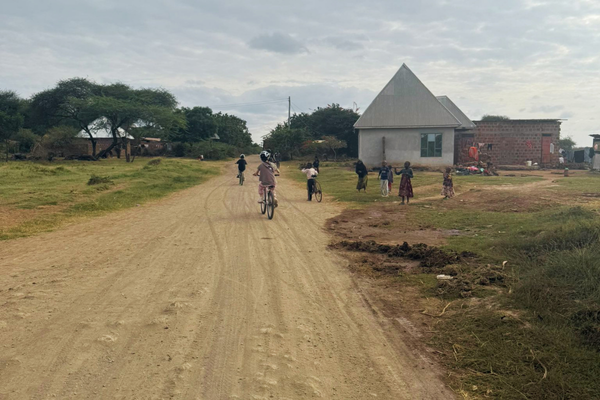
Your guide meets you at your Moshi hotel at 8am. The drive to Kahe takes approximately 45 minutes to an hour, heading southeast from Moshi. You pass the edge of the TPC sugar estate and then the road flattens into open lowland. The landscape becomes drier and more open as you move away from the mountain. Your guide explains what you are seeing on the way: the geography of the area, the difference between the Chagga highland communities and the Maasai pastoral communities in the lowlands, and what to expect when you arrive.
Arriving at the boma
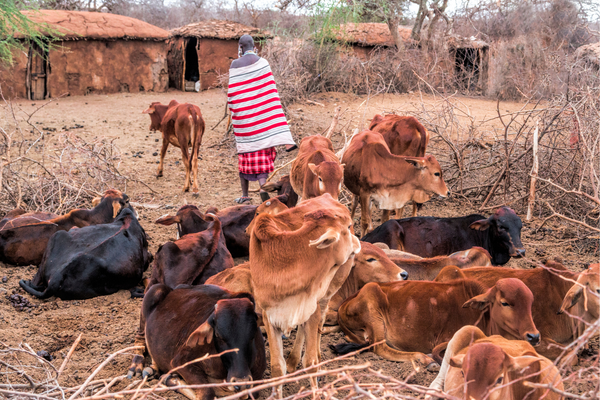
A boma is the Maasai word for a homestead. It is not a village in the sense of a collection of unrelated households. It is the home of one extended family: a circular arrangement of small mud and thatch houses built by the women of the family, surrounded by a fence of tightly woven acacia thorn branches. The thorn fence is a practical structure: it keeps the cattle in at night and predators out. In the early morning, if the men have not yet taken the cattle out to graze, the sound and smell of the herd inside the central enclosure are the first things you notice when you approach.
The family is expecting you. Your guide introduces you and translates throughout the visit. The morning is not scripted. What happens reflects what is happening in the boma that day.
Time inside the boma: stories, daily life, and conversation
The visit begins with tea. The Maasai serve a sweet, milky tea brewed on a small fire inside the main house. You sit. The elder of the family speaks first, usually beginning with the history of how this particular family came to be in this particular place: where they moved from, what drove that movement, how the land around Kahe has changed in their lifetime. Your guide translates.
From there the conversation goes where the family and the visitors take it. The elder may talk about the age-set system and what it means to pass from one stage of life to the next. A woman of the family may show you the beadwork she is making and explain what the patterns and colours signify: which indicate that a woman is married, which indicate how many children she has, which are worn only at ceremonies. If the cattle are still in the enclosure, the elder may walk you to the fence and talk about the herd: which animals were inherited, which were received as gifts at a ceremony, what happens to the herd when the rains fail.
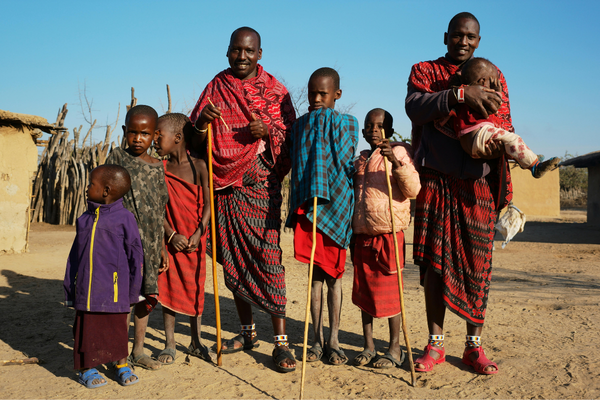
Children are usually present. They are curious about visitors and the interaction between local children and visiting adults, mediated by your guide, is often one of the moments people remember most from this visit. The children are not performing. They are at home.
Return to Moshi
The visit ends when it ends naturally, usually after two to three hours. There is no fixed checkout time and no craft stall at the exit. If the family has beadwork they wish to sell, it will be offered during the visit and any purchase goes directly to the person who made it. Your guide drives you back to Moshi, arriving before midday. The afternoon is free.
Price $45 per person sharing
What is Included
- You will have a genuine conversation with a Maasai family, not watch a performance
- You will see how a real boma is structured and how daily life is organised inside it
- You will hear stories from an elder about Maasai history, cattle, and community life
- You will see the beadwork being made and understand what it communicates
- You will have your questions answered honestly through your guide
- You will not see a choreographed jumping performance organised for tourists
- You will not be rushed through a circuit and exited through a craft market
- You will not be the tenth group to arrive at the same boma that day
What is Excluded
- Private transport from your Moshi hotel and back
- English-speaking Watoky guide and interpreter throughout
- Community contribution fee paid directly to the Maasai family
- Tea inside the boma
- Bottled water for the drive
Practical Information
What to wear: Dress modestly and comfortably. Avoid very short shorts or tops that expose a lot of skin. Bright colours and patterns are fine: the Maasai are not bothered by them and in fact wear vivid colours themselves. Closed shoes or sandals are both suitable as there is no difficult terrain.
Photography: You are welcome to take photographs of the boma and the surrounding landscape. Always ask your guide before photographing individuals. The guide will request permission on your behalf and the family will let you know who is comfortable being photographed. Do not photograph anyone who has not consented. This is not a rule imposed by Watoky: it is basic respect.
Children: This visit is well-suited to children and can be genuinely educational. Maasai children are around the same age and the natural interaction between children from different backgrounds often produces the most memorable moments of the visit. Prepare your children in advance by explaining that they are visiting someone’s home and that the usual rules of being a guest apply.
Language: The family speaks Maa, the Maasai language, and Swahili. Your Watoky guide speaks all three languages and interprets throughout. You do not need any Swahili or Maa.
Community contribution: A contribution fee is paid directly to the family as part of your tour price. This is not a gate fee paid to an operator: it goes directly to the household you are visiting. We are transparent about this and the amount is confirmed when you book.
Group size: We limit this visit to a maximum of 6 visitors at a time. Larger groups change the atmosphere of a boma visit significantly: it becomes harder for the family to host naturally and harder for individual visitors to have real conversations. Six people or fewer allows the visit to function as what it is meant to be: a visit to a family home.
Got Questions?
Frequently Asked Questions
How is this different from the Maasai village visits offered by other operators?
Most Maasai village visits in Tanzania follow the same format: a community near a tourist road or park entrance performs the adumu jumping dance, walks visitors around a fixed circuit, and exits them through a craft stall. The visit lasts 45 minutes to an hour and the people you meet are in performance mode throughout. This visit starts from a different premise. The Maasai family at Kahe lives there permanently and is not primarily in the tourism business. The visit is arranged through a genuine relationship between Watoky and the family, not through a tourism brokerage. What you see and hear is determined by what is actually happening that morning, not by a script.
Will there be a jumping dance performance?
The adumu, the Maasai jumping dance performed by young warriors, may or may not happen on your visit. It is not scheduled as part of the tour. If the men of the family choose to demonstrate it during your visit, you will see it in a context that reflects its actual place in Maasai life rather than as a performance item on a tourist checklist. Most genuine Maasai cultural visits include some version of the adumu at some point because the Maasai are proud of it and enjoy sharing it. The difference is whether it is staged on command or offered naturally.
Is it ethical to visit a Maasai community as a tourist?
This is a fair and important question. The research on ethical Maasai village visits consistently points to the same factors that determine whether a visit benefits or harms the community: whether the community members have genuine agency over the visit, whether the financial benefit goes directly to them rather than to middlemen, whether the group size is small enough to allow natural interaction, and whether the community’s daily life is respected rather than disrupted. This visit meets all of these criteria. The family chooses when to accept visitors, receives the community contribution fee directly, and hosts a maximum of six people at a time. If a visit does not feel right on a particular day for any reason, we reschedule.
Can I take photos?
You can photograph the boma, the landscape, the cattle, and the structures freely. Photographing individuals requires asking permission, which your guide will do on your behalf. Some family members are happy to be photographed. Others prefer not to be. The guide will let you know who is comfortable before you raise your camera. This is not a special rule for this visit: it is simply how you behave in someone’s home.
What should I bring?
Very little is needed. Wear comfortable clothes and closed shoes or sandals. Bring sunscreen and a hat as the Kahe lowlands are significantly hotter than Moshi town. Bring a small amount of Tanzanian shillings if you wish to purchase beadwork or other items directly from the family, though this is entirely optional and never expected. Do not bring sweets or money to give to children: it creates expectations that are harmful to the community over time. Your guide will advise on what is appropriate to bring as a contribution.
Can I combine this with another day trip?
This visit ends by midday, leaving your afternoon free. It can be combined with the Chemka Hot Springs trip on the same day if you want to add a swim in the afternoon. Chemka is also in the Moshi Rural District lowlands and the routing between Kahe and Chemka is practical for a combined day. Let us know when you enquire and we will plan the logistics.
Is this visit suitable for children?
Yes. The visit works well for children from about 6 years old upwards. The natural interaction between visiting children and the Maasai children in the boma often produces the most genuine moments of the whole visit. Prepare your children in advance with a simple explanation: you are visiting a family in their home, the rules of being a polite guest apply, and the best thing to do is ask questions rather than just observe. Children who are curious tend to get the most out of this visit.
Ready for a Maasai Experience? Start Here
Send us your preferred date and group size and we will confirm availability within 24 hours. This visit is limited to 6 people to keep it genuine, so availability can be limited during busy periods. Early booking is recommended.
No payment until your trip is confirmed. You will receive full details and a cost breakdown before you commit to anything.
- Chat on WhatsApp Quickest response
Most guests reach us this way. Send a short message with your dates and we will reply with a full quote, usually within a few hours.
+255 623 889 000