
From Bean to Waterfall
Materuni Waterfall and Coffee Tour
Day Trip | Nature and Culture | Half Day | From Moshi | Pickup Included | From $45 per person
The Materuni Waterfall and Coffee Tour from Moshi is a full day trip to the Chagga farming village of Materuni on the slopes of Mount Kilimanjaro, 15 kilometres from Moshi town. You walk through coffee and banana farms at 1,800 metres above sea level, learn the full process of growing and making coffee by hand from harvest to cup, share lunch with a local family, and finish at Materuni Waterfall, a 90-metre waterfall that most visitors in Moshi never see.
This is not a bus tour with a scripted commentary. It is a walk through a working community with a guide who knows the people there. The coffee knowledge you leave with is real: you understand why Kilimanjaro Arabica tastes the way it does, how altitude and volcanic soil affect the bean, and what the processing stages between the farm and your cup actually involve. Most visitors say the coffee session is more interesting than they expected it to be.
Trip at Glance
| Duration | 2 days / 1 night |
|---|---|
| Destination | Materuni Village |
| Starts | Moshi, Hotel Pick up |
| Ends | Moshi, Hotel Drop off |
| Group type | Private. Your group only, no shared tours |
| Meals | Lunch at a local restaurant in the village |
| ALTITUDE | Materuni village sits at approximately 1,800 metres above sea level |
| Distance | 15 kilometres from Moshi town to Materuni village |
| hiking | Approximately 8 kilometres of walking, 300 metres elevation |
| best season | January to March for fewer crowds and green landscapes |
| Trip price | From $50 per person (based on 2 people) |
What This Materuni Tour is About
Tanzania is associated with wildlife above everything else. That is fair. But the slopes of Kilimanjaro tell a different story about this country, and the Materuni coffee tour is the best way to access it.
The Chagga people have lived on the southern and eastern slopes of Kilimanjaro for centuries. They are one of the most agriculturally skilled communities in East Africa, and they understood long before anyone else that the volcanic soil on Kilimanjaro’s lower slopes, combined with the altitude and the consistent cloud moisture from the mountain, creates ideal conditions for growing coffee. The coffee farms at Materuni sit at roughly 1,800 metres above sea level. At that altitude, the Arabica beans develop slowly and build more complex flavour compounds than lowland coffee. This is why Kilimanjaro coffee has a distinct profile: bright acidity, clean finish, and a body that reflects the mineral richness of the volcanic soil it grew in.
The walk through the farms is not a factory tour. You move through working land, between banana trees that shade the coffee plants, past irrigation channels the community has managed for generations. Your guide explains each stage: the red coffee cherries at harvest, the pulping process that removes the outer fruit, the fermentation that loosens the mucilage, the drying on raised beds, the hulling, the roasting over a wood fire, the grinding in a traditional wooden mortar. By the time the cup reaches you, you have watched every step.
After the coffee session you share lunch at a family home in the village. Then the walk continues uphill through denser forest to the waterfall. The trail gains elevation and the vegetation thickens as you approach the gorge. The sound arrives before the view. Then the waterfall opens in front of you: 90 metres of water falling into a rock pool surrounded by mist and forest. You can swim.
Most people in Moshi have never made this walk. Most tourists who pass through Moshi never know it is there. This is precisely what makes it worth doing.
Itinerary
Pickup from your Moshi hotel
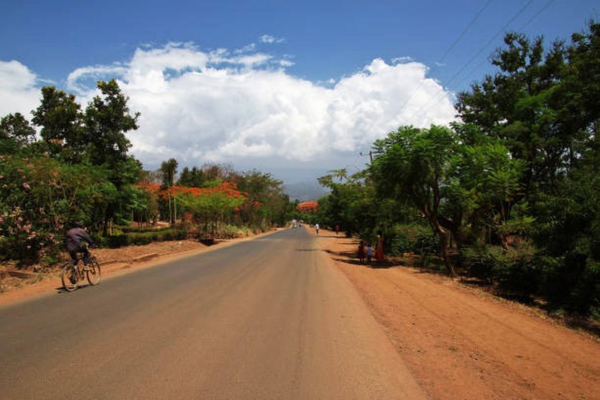
Your guide meets you at your hotel in Moshi at 8am. The drive to Materuni takes approximately 45 minutes on a road that climbs steadily through the lower slopes of Kilimanjaro. The landscape changes quickly as you leave town: buildings give way to banana groves, the traffic thins, and the air cools. By the time you pull into the village you are well above the heat of Moshi.
Walk through the coffee and banana farms
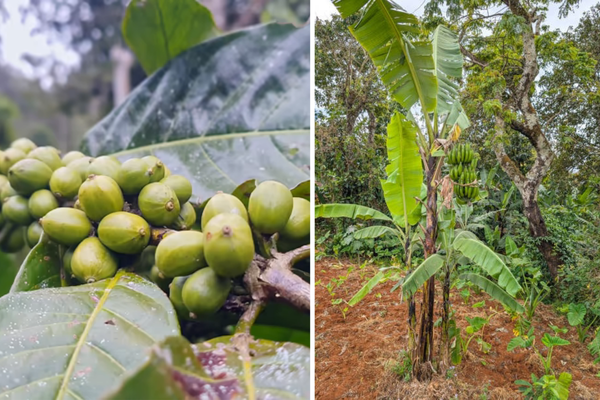
The farm walk begins at the edge of the village. Your guide introduces you to the Chagga family whose land you are walking through and the tour begins. You move slowly. The explanations are thorough: the biology of the coffee plant, the difference between Arabica and Robusta varieties, why this particular altitude and volcanic soil produce the quality they do, and how the Chagga have intercropped banana and coffee together for centuries as a deliberate sustainable system.
The banana trees are not incidental. They provide shade for the coffee plants below, slowing the ripening of the beans and allowing the sugars to develop more complex flavours. The broad leaves decompose into organic matter that feeds the soil. The same trees produce food for the family. The farm you are walking through is not a modern plantation designed for scale. It is a centuries-old system that still makes complete ecological sense.
The full coffee process, from cherry to cup
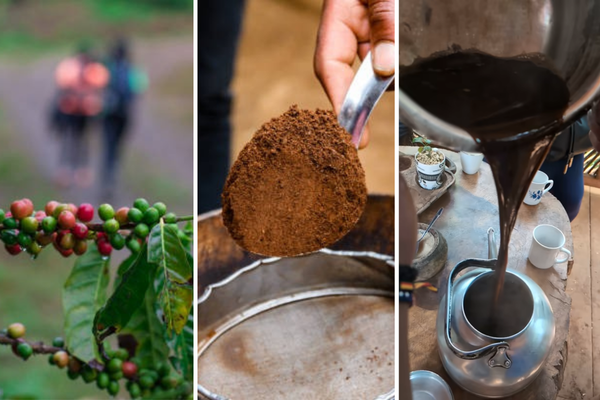
At the processing area the guide and the family work through each stage of coffee production using traditional methods. The red cherries are pulped by hand using a small wooden board to remove the outer fruit skin. The sticky mucilage layer that coats the bean is broken down through fermentation in water overnight. The washed beans are then spread on raised mesh drying beds in the sun.
You watch the dried green beans roasted over a wood fire in a curved metal pan, stirred constantly by hand until the colour moves from pale green through yellow to a deep even brown and the smell of fresh-roasted Kilimanjaro Arabica fills the air. The roasted beans are pounded in a traditional wooden mortar, brewed in a clay pot, and served. You drink the coffee you just watched being made, at 1,800 metres, on the mountain where the beans grew.
Hike to Materuni Waterfall
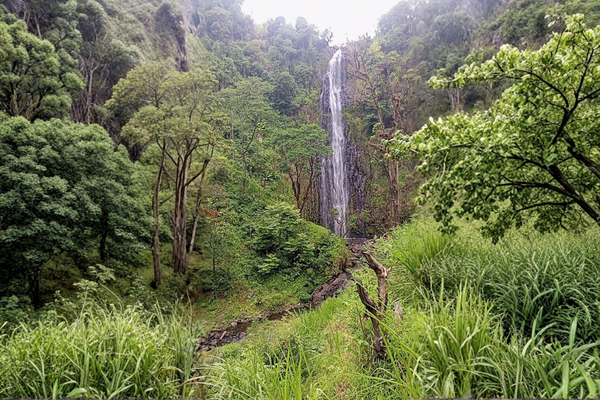
From the farm the trail heads uphill toward the waterfall. The path narrows quickly as you leave the farm area and enter the montane forest. The temperature drops as you gain altitude. The trail follows the Materuni River upstream through bamboo groves and highland forest, crossing the river at several points on simple wooden bridges. The hike from the village to the waterfall takes about 45 minutes at a relaxed pace.
The waterfall drops 90 metres into a wide rock pool at its base. The spray reaches you well before the fall comes into view. The pool is safe to swim in: the water is cold and clear, fed directly by Kilimanjaro rainfall and glacial melt from the upper slopes. There is no entry gate, no ticket booth, no other tourist infrastructure. You will likely have it to yourselves.
Lunch at the village restaurant, then back to Moshi
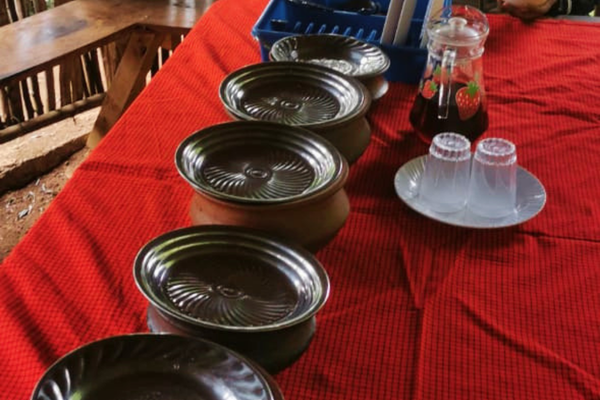
The return walk to the village takes about 40 minutes. Back in the village you stop for lunch at a small local restaurant. The menu is Chagga: ugali, beans, green bananas cooked in different ways, and local vegetables from the same slopes you walked through. Simple, honest food after a morning well spent.
After lunch your guide brings you back to the vehicle for the descent to Moshi. The drive takes roughly the same 45 minutes as the morning. You arrive back in Moshi by around 2pm, leaving the rest of the afternoon free.
Price $50 per person sharing
What is Included
- Private guide throughout the half day tour
- Return transport from your Moshi hotel
- Full coffee farm tour and processing demonstration
- Traditional Kilimanjaro coffee tasting
- Lunch at a local village restaurant
- Hike to Materuni Waterfall and back
- All village and farm access fees
- Bottled water during the tour
What is Excluded
- Gratuities for your guide (standard $5 to $10, at your discretion)
- Any additional food or drinks beyond lunch and coffee
- Personal items and medication
- Travel insurance
Practical Information
Fitness level: Moderate. The tour involves approximately 5 to 6 kilometres of walking on uneven forest and farm tracks. The trail to the waterfall descends about 150 metres and the same elevation is regained on the return. Comfortable walking shoes or light hiking boots are important. Flip flops and sandals are not suitable.
What to wear: Lightweight clothing that you do not mind getting muddy. A light waterproof layer for the waterfall. Long trousers are recommended for the forest trail section. Bring a dry change of clothes if you plan to swim.
What to bring: Small backpack, sunscreen, insect repellent, a hat, a camera, and any personal medication. The guide carries water.
Swimming: The pool at the base of the waterfall is safe to swim in. The water is cold. A swimsuit and a small towel are worth bringing.
Group size: Private tour. You travel with your own group only.
Children: Suitable for children who are comfortable with moderate hiking. Minimum recommended age is 8 years. Younger children can attempt the farm section but may find the waterfall hike tiring.
Rain: The tour runs in all weather. Light rain is common on the mountain and adds to the atmosphere. Bring a waterproof layer. Heavy rain may affect trail conditions: your guide will advise if any section needs to be adjusted.
Altitude: Materuni sits at 1,800 metres. This is not high enough to cause altitude sickness in healthy visitors but the air is noticeably cooler than Moshi town.
Got Questions?
Frequently Asked Questions
How far is Materuni Waterfall from Moshi?
Materuni village is 15 kilometres from Moshi town, approximately a 45-minute drive on a road that climbs into the Kilimanjaro foothills. The waterfall itself is a further 45-minute hike from the village, following the Materuni River upstream through highland forest. The total travel time from your hotel pickup to the waterfall is approximately 2.5 to 3 hours
How difficult is the hike to Materuni Waterfall?
The hike to Materuni Waterfall is moderate in difficulty, covering approximately 8 kilometres with 300 metres of elevation gain over the full day. The trail is unpaved and includes some steeper sections on the approach to the waterfall and the return. Comfortable walking shoes or light hiking boots are required. The hike is not suitable for flip flops or sandals. Most people of average fitness complete it without difficulty. If you have specific concerns about mobility or fitness, mention them when you enquire and your guide will advise.
Is the Materuni coffee tour suitable for non-coffee drinkers?
Yes. The coffee tour is about the agriculture and the process, not just the taste at the end. Understanding how a bean travels from a red cherry on a branch to a roasted cup, using only traditional hand tools on a Kilimanjaro farm, is interesting regardless of whether you drink coffee. Non-coffee drinkers regularly find the farm walk and the processing demonstration the most engaging part of the day. Tea is available at the tasting if preferred.
Can I swim at Materuni Waterfall?
Yes. The rock pool at the base of Materuni Waterfall is safe to swim in. The water is cold, fed by snowmelt and rainfall from Kilimanjaro, and clean. There are no facilities at the waterfall: bring a swimsuit and a small towel if you plan to swim. The pool is deep enough near the base of the fall and shallower toward the edges.
What is the best time of year to visit Materuni Waterfall?
Materuni Waterfall is accessible year-round. The waterfall is at its fullest and most dramatic during and after the two rainy seasons: March to May and October to December. During the dry season from June to September the water volume drops slightly but the trails are drier and easier to walk. The coffee harvest season runs from September to December, which is the best time to see fresh cherries being picked on the farm. The tour is worth doing in any month.
What is Chagga coffee and why is Kilimanjaro coffee considered special?
Kilimanjaro Arabica coffee is considered one of Tanzania’s finest because of the specific growing conditions on the mountain’s slopes: volcanic soil rich in minerals, consistent altitude between 1,200 and 2,000 metres, cloud cover that moderates temperature, and rainfall distributed across much of the year. At these altitudes the Arabica beans develop slowly, producing more complex sugars and organic acids than lowland-grown coffee. The Chagga people on Kilimanjaro have cultivated coffee for over a century and developed farming methods, including intercropping with banana trees for shade, that are now recognised as sustainable models for small-scale coffee production.
Start Planning Materuni Coffee and Waterfall Tour
To book the Materuni Waterfall and Coffee Tour from Moshi, send us your dates and group size. You will hear back within 24 hours, directly from your guide.
No payment until your trip is confirmed. You will receive full details and a cost breakdown before you commit to anything.
- Chat on WhatsApp Quickest response
Most guests reach us this way. Send a short message with your dates and we will reply with a full quote, usually within a few hours.
+255 623 889 000